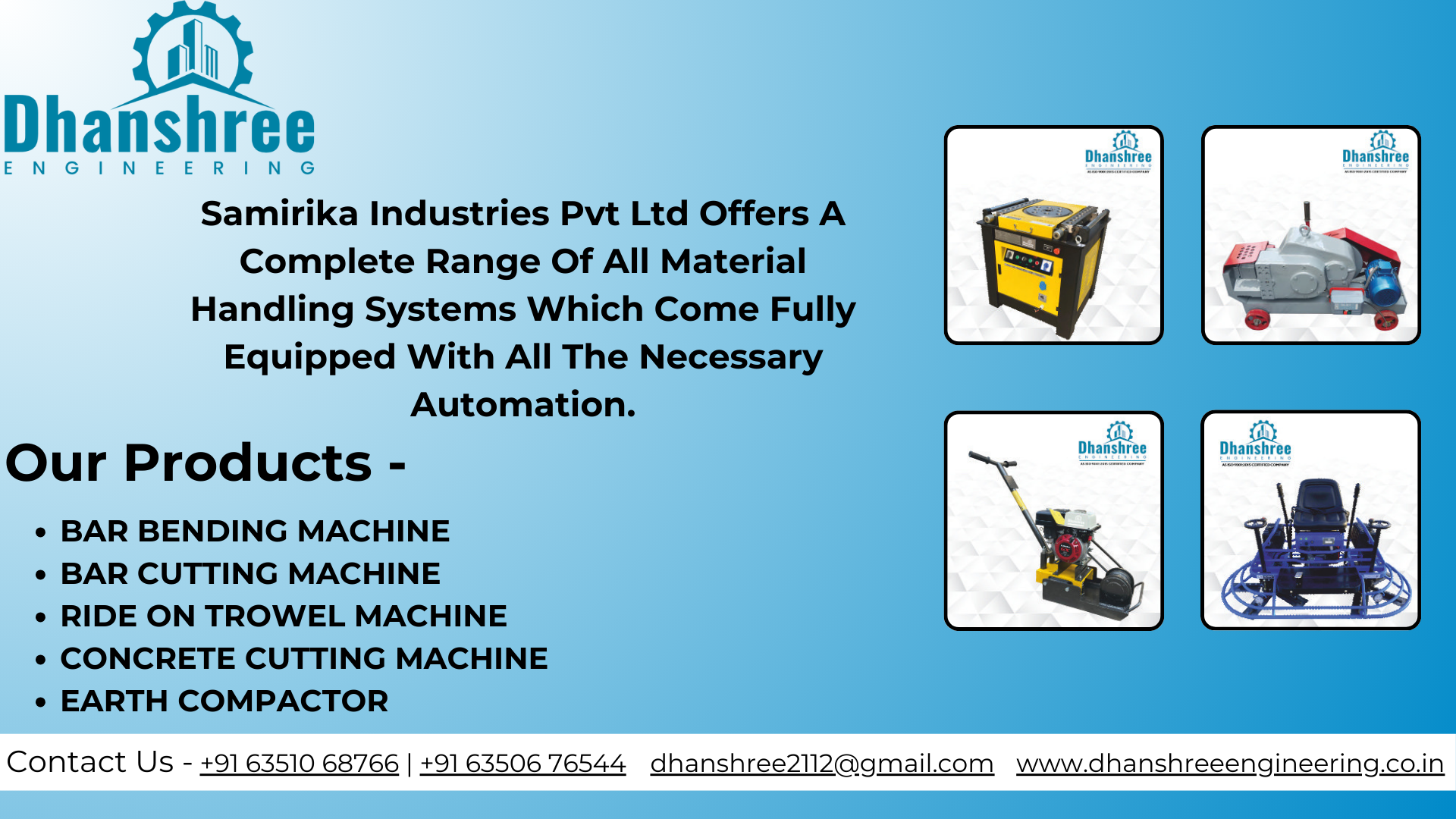
Introduction to Bar Bending Machine Manufacturers
Bar bending machines are essential equipment in modern reinforcement work, helping contractors and fabrication yards bend steel bars into accurate shapes for beams, columns, slabs and foundations. Leading bar bending machine manufacturers focus on strength, stable bending accuracy, smooth operation and long service life, so teams can achieve repeatable bends for TMT bars without rework. From site-ready rebar benders to heavy duty workshop models, the right machine supports faster production, cleaner bends and safer handling for reinforcement steel.
Working Principle and Process Flow of Bar Bending Machines
A bar bending machine works by applying controlled force through a rotating bending plate and bending pins. The operator sets the bending angle and places the bar against the pins, and the motor-driven mechanism bends the bar to the required shape. Many machines use sturdy gear systems, rigid frames and anti-vibration bases for stable output. For consistent production, correct pin placement, steady feed, proper lubrication and routine checks help maintain accuracy across repetitive bending cycles.
Types of Bar Bending Machines
- Manual bar benders for small job sites and light reinforcement bending needs.
- Electric bar bending machines for standard construction site production and daily use.
- Hydraulic bar benders designed for higher force and demanding bending applications.
- Stirrup and ring bending machines for repetitive shapes used in columns and beams.
- Workshop rebar bending machines for fabrication yards needing fast batch output.
Key Features and Specifications of Bar Bending Machines
- Rigid bending plate and hardened pins for clean bending with reduced deformation.
- Stable frame and base design to minimize vibration and support accurate angles.
- Efficient motor and gear system for smooth rotation and consistent bending cycles.
- Angle control support for repeatability in common shapes and repeated production.
- Operator-friendly controls and safety guards to support safer daily site operation.
Applications of Bar Bending Machines
- Reinforcement bending for residential and commercial construction including slabs, beams and columns.
- Infrastructure projects such as bridges, highways and industrial plants requiring repeatable rebar shapes.
- Fabrication yards producing stirrups, rings and customized bends for large supply requirements.
- Precast and RCC works where precise bending supports consistent structural reinforcement layouts.
Benefits of Using Reliable Bar Bending Machines
- Faster bending cycles reduce manual effort and help teams meet tight project schedules.
- Consistent bending angles reduce rework and improve reinforcement fit at the site.
- Cleaner bends support better structural assembly and streamlined steel placement.
- Improved safety compared to manual bending, with controlled force and stable operation.
Choosing the Right Manufacturer for Your Project
When evaluating bar bending machine manufacturers, focus on build quality, ease of maintenance, spare availability and service support. A dependable manufacturer typically offers durable frames, reliable drive systems and guidance for routine maintenance. Match the machine type to your daily output needs, bar sizes and site conditions. For contractors and fabrication units, selecting a machine that supports steady bending performance and operator safety ensures long-term value and consistent productivity.
Maintenance and Safety Tips
- Inspect bending pins, plate surface and guards before each shift for safe operation.
- Keep the bending area clean to avoid debris interference during rotation and bending.
- Lubricate moving parts as recommended to reduce wear and maintain smooth motion.
- Use correct pin settings and avoid overloading to protect gears and motor performance.
- Train operators on safe handling, correct positioning and emergency stop procedures.
FAQs – Bar Bending Machine Manufacturers
Contact Details
Talk to our specialists today for tailored solutions and fast assistance.