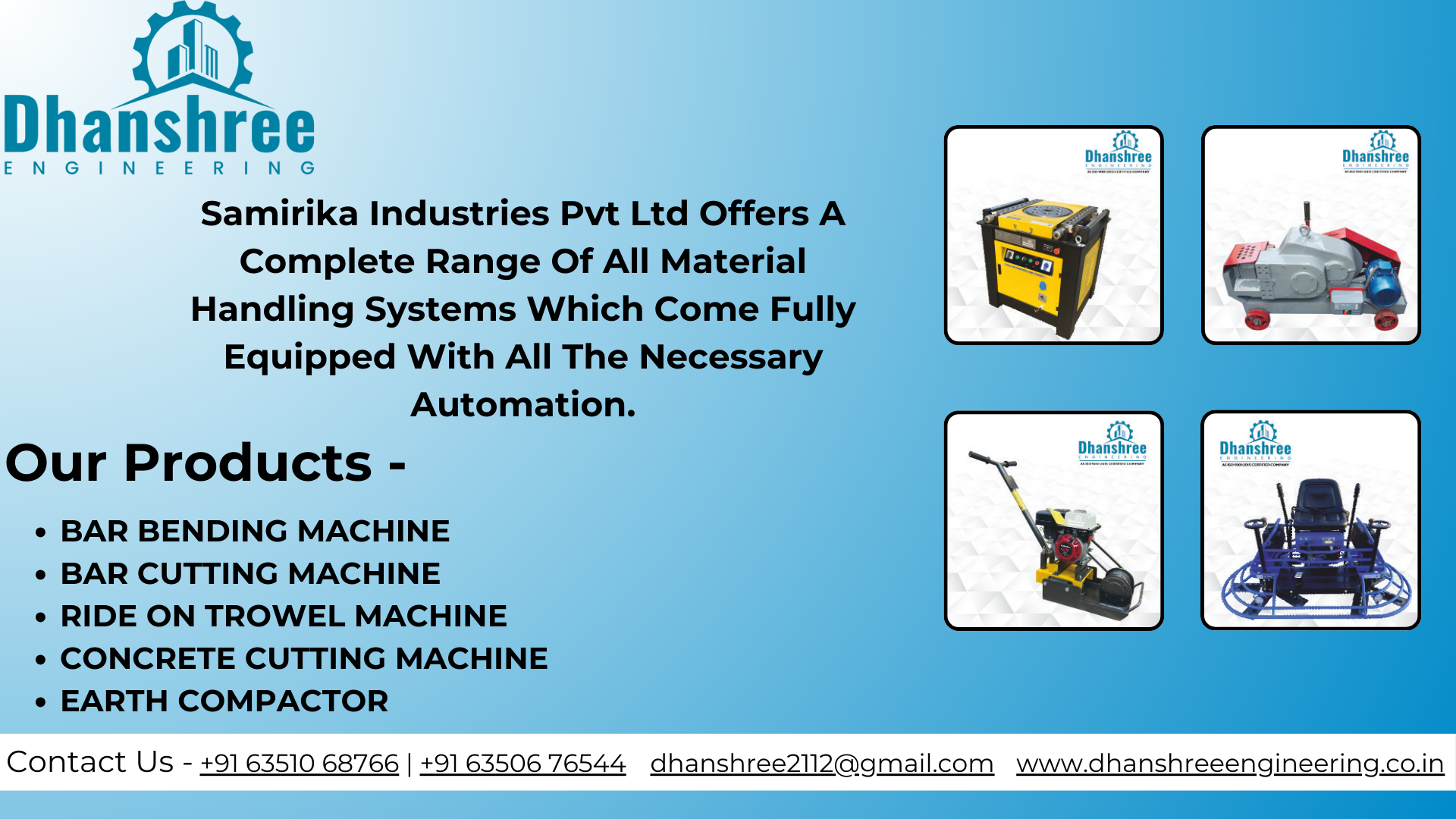
Introduction to Bar Bending Machine / Bar Bender
A bar bending machine, also known as a bar bender, is an essential construction equipment used to bend reinforcement bars (TMT rebar) into accurate shapes required for RCC works. For modern site execution, bar bending machines help achieve consistent angles, uniform bends, and faster production compared to manual bending methods. Contractors, fabricators, builders, and infrastructure teams rely on bar benders to improve productivity, reduce rework, and maintain structural quality across residential, commercial, industrial, and road projects.
Working Principle and Process Flow of Bar Bending Machines
A bar bending machine works by gripping the rebar between a fixed and a rotating bending pin. When the motor-driven bending disc rotates, the bar is forced around the bending pin to form a precise angle. Depending on the machine type, the operator selects the bending angle, feeds the bar, aligns it using guides, and starts the bending cycle. Many bar benders are designed with strong gear systems, stable frames, and safety controls to ensure accurate bending even during continuous heavy-duty operation.
Types of Bar Bending Machines
- Manual bar benders for light-duty bending and small fabrication work.
- Electric bar bending machines for fast, accurate bending in bulk production.
- Hydraulic bar benders for high-force bending in tougher bar grades and large diameters.
- Portable bar benders for on-site bending where space and movement are limited.
- Automatic bar benders with angle presets for repetitive bending and better output control.
Key Features and Specifications of Bar Benders
- Accurate bending angles for stirrups, hooks, rings, and custom shapes.
- Robust bending disc and pins engineered for long service life and stability.
- High torque drive system for smooth bending under continuous workloads.
- Easy angle setting and repeatability to reduce error and improve uniformity.
- Operator-friendly controls with safety interlocks for secure operation at site.
Applications of Bar Bending Machine / Bar Bender
- RCC column, beam, slab and footing reinforcement bending for construction and civil works.
- Stirrups, links, U-bends, L-bends and hook bends for structural reinforcement fabrication.
- Infrastructure projects such as bridges, flyovers, metro works and road-side structures.
- Precast units and fabrication yards requiring repeatable bending patterns and faster output.
Benefits of Using a Bar Bender
- Improves productivity by reducing bending time for repetitive reinforcement shapes.
- Ensures consistent bend angles and better accuracy compared to manual bending.
- Reduces labor fatigue and supports safer, cleaner and more organized site operations.
- Helps minimize rework and material waste by achieving uniform bending results.
How to Choose the Right Bar Bending Machine
Selecting the right bar bender depends on bar diameter range, bending frequency, site conditions, and portability requirements. For continuous production, an electric or hydraulic bar bending machine offers better speed and uniformity. If your work involves frequent movement between floors or multiple sites, a portable bar bender is a practical solution. Consider build quality, ease of angle adjustment, safety features, and service support to ensure long-term reliability in real construction environments.
Maintenance and Safety Tips
- Inspect bending pins, disc and guides regularly to avoid inaccurate bends.
- Keep the machine clean and remove metal dust or debris after each shift.
- Lubricate moving parts as recommended to ensure smooth operation and reduce wear.
- Check electrical connections and emergency stop functionality before daily use.
- Train operators on safe handling, correct bar alignment and bending procedures.
FAQs – Bar Bending Machine / Bar Bender
Contact Details
Talk to our specialists today for tailored solutions and fast assistance.